



There are no products listed under this category.
No Project Limit
Class A is Virginia's highest contractor license class and does not place a monetary limit on individual projects or annual contracting volume.

Prepare for Virginia Class A, Class B, Class C, CBC, RBC, CIC, Drywall, NASCLA, Business and Law, and pre-license requirements with online courses, books, tabs, and practice exams.
Courses · Booksets · Tabs · Practice exams
Class A is Virginia's highest contractor license class and does not place a monetary limit on individual projects or annual contracting volume.
Class B applies to projects within the monetary limits established for this class. The source information lists a $120,000 individual project limit.
Class C is intended for lower-value contracting work. The source information lists a $10,000 individual project limit.
The Virginia Commercial Building Contractor classification covers qualifying commercial, industrial, institutional, and modular construction projects.
The NASCLA Commercial General Building examination provides a standardized trade-exam path accepted by multiple participating jurisdictions and may be useful for contractors seeking licenses in several states.
The Virginia Residential Building Contractor classification covers qualifying construction, remodeling, repair, improvement, removal, and demolition involving dwellings, townhouses, and related residential property.
The Virginia Commercial Improvement Contractor classification covers qualifying repair and improvement work involving non-residential structures.
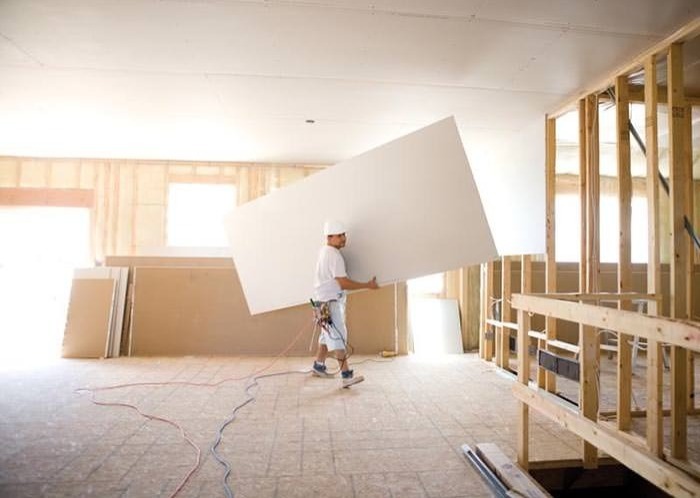
The Virginia Drywall Contractor classification covers qualifying drywall installation, removal, repair, finishing, and related specialty work.
The Virginia Business and Law examination covers contractor business operations, project management, Virginia regulations, contracts, finances, insurance, labor, taxation, and legal responsibilities.
The Virginia eight-hour pre-license course is required for contractor applicants regardless of the selected license class or classification.
| Classification | Residential Work | Commercial Work | Trade Exam | Business and Law |
|---|---|---|---|---|
| CBC Commercial Building | Limited by classification | ✓ | CBC or accepted alternative | Required for Class A and B |
| NASCLA Commercial Building | Through approved classification | ✓ | NASCLA | May be required |
| RBC Residential Building | ✓ | Not the primary scope | RBC | Required for Class A and B |
| CIC Commercial Improvement | Limited scope | Improvements only | CIC | Required for Class A and B |
| Drywall Contractor | Specialty scope | Specialty scope | DRY | Depends on license class |
Select Class A, B, or C based on your intended project values. Then choose the classification that matches the work you plan to perform.
Complete the required Virginia eight-hour pre-license education course before submitting your contractor license application.
Complete the applicable trade examination and, for Class A and B applicants, the required Virginia Business and Law examination portions.
Submit your application, experience documentation, financial information, business records, exam results, fees, and other required materials to Virginia DPOR.
Your Class A, B, or C designation determines the project-value limits and financial qualifications that apply to your contractor license.
The classification determines the permitted work. Examples include CBC, RBC, CIC, and Drywall.
Applicants must complete the eight-hour pre-license course and pass the required trade and business examinations for the selected class and classification.
Online exam-preparation course plus the complete required reference-book set.
Online course plus professionally highlighted and tabbed reference books.
Self-paced online lessons and practice exams without the reference books.
The complete approved reference-book set for your selected Virginia contractor examination.
Pre-printed tabs designed to help you locate important sections quickly during an open-book examination.
Purchase only the approved references missing from your existing book collection.
A Virginia contractor license includes both a class and a classification. The class determines the monetary limits of the license, while the classification determines the type of work the contractor may perform.
Class A is the highest license class and does not impose the same project-value limit as the lower classes. Class B and Class C licenses have lower monetary limits and different financial qualification requirements.
Based on the information provided, Virginia generally requires the appropriate contractor license for qualifying construction projects valued at more than $1,000.
CBC stands for Commercial Building Contractor. It covers qualifying commercial, industrial, institutional, and modular construction within the limits of the contractor's license class.
RBC stands for Residential Building Contractor. It covers qualifying construction, remodeling, repair, improvement, removal, and demolition involving dwellings, townhouses, and related residential property.
CIC stands for Commercial Improvement Contractor. It covers qualifying commercial repair and improvement work but does not include new building construction or work requiring separate electrical, plumbing, HVAC, or gas classifications.
The Drywall Contractor classification covers qualifying drywall installation, removal, repair, replacement, finishing, and related specialty work.
The NASCLA Commercial General Building examination may be an accepted trade-exam option for qualifying Virginia commercial contractor applications. Applicants must still satisfy Virginia application, classification, class, financial, and Business and Law requirements.
NASCLA is accepted as a commercial general building trade examination by multiple participating jurisdictions. It can be useful for contractors who may seek commercial licenses in more than one state.
Virginia Business and Law is required for Class A and Class B contractor applicants. Class C applicants do not take the separate Business and Law examination described on this page.
The exam has three parts. Class A applicants must pass all three parts. Class B applicants complete the General and Virginia portions.
Yes. The source information states that the eight-hour pre-license course is required for Virginia contractor applicants regardless of the selected license class or classification.
Yes. The course described on this page is delivered online and includes instructional videos and quizzes that must be completed before applying.
Approved references may be permitted for certain Virginia contractor examinations. Review the current candidate bulletin for your exam to confirm approved books, tab rules, testing time, and prohibited materials.
Effective preparation generally combines an online course, the approved reference books, book-navigation practice, and repeated timed practice examinations.
Yes. Depending on the examination, available options may include course-only, bookset-only, tabset-only, individual books, regular combos, and pre-highlighted and tabbed combos.
No. Passing the required examinations and completing the pre-license course are only parts of the licensing process. Applicants must also satisfy Virginia's application, experience, financial, business-entity, fee, and classification requirements.
Choose your Virginia license class and classification, then find the course, books, tabs, and complete preparation package you need.
There are no products listed under this category.